
when choosing servers and cloud hosts, it is very important to understand the geographical location and legal environment of "where does the server belong in singapore". this article comprehensively interprets the geographical advantages and compliance requirements of singapore servers from the aspects of data center distribution, network interconnection, regulatory regulations and compliance practices, and provides feasible suggestions for enterprise deployment and operation.
servers where does singapore belong: geography and infrastructure overview
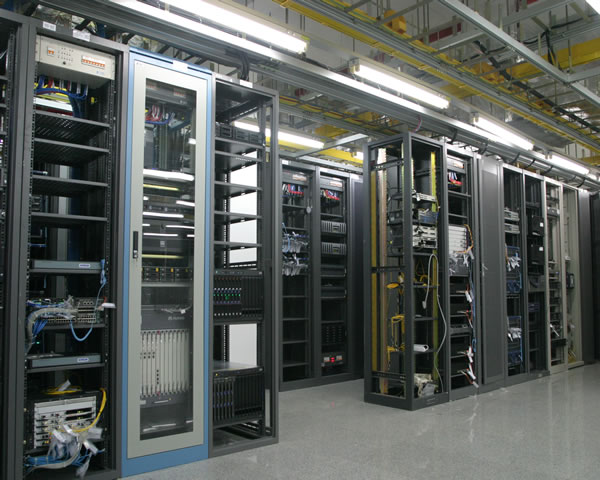
as an interconnection hub in southeast asia, singapore's servers and data centers are mainly concentrated in cities and industrial parks, close to major submarine optical cable landing points. the superior geographical location brings low latency and high accessibility, making it easy to deploy services to southeast asia, south asia and australia. it also has redundant power and cooling conditions to support high-density computing and disaster recovery layouts.
data center distribution and operation characteristics
most data centers in singapore are managed by professional operators and have multiple layers of physical security, backup power and multiple network access. due to limited land, data centers emphasize high energy efficiency and dense design, and generally support hybrid cloud, hosting and disaster recovery services, allowing enterprises to flexibly expand according to business needs and achieve cross-site disaster recovery.
network connectivity and latency advantages
singapore is located at the convergence point of numerous submarine optical cables and has mature international backbone network connections, providing low-latency links to major cities in the asia-pacific. for sensitive services such as financial transactions, real-time gaming and streaming media, singapore servers can significantly reduce client latency and improve availability, while facilitating cross-border bandwidth procurement and multi-region load balancing.
legal and regulatory framework: pdpa and industry regulation
singapore’s personal data protection act (pdpa) is the core regulation for processing personal data, requiring reasonable technical and administrative measures to protect data and limit its use. generally speaking, singapore does not mandate general data localization, but there are more stringent compliance and audit requirements in industries such as finance, telecommunications, and medical care. enterprises need to conduct compliance assessments based on their industries.
cross-border data transfer and compliance practices
cross-border transfers need to ensure the level of data protection under the pdpa framework. common practices include signing a data processing agreement, adopting encryption and access control, and conducting impact assessments. keeping clear records of data flows, third-party processors and storage locations, and clarifying responsibilities in contracts, can help reduce regulatory and legal risks.
certification, auditing and operation and maintenance advice
give priority to computer rooms or service providers with systematic compliance and security management, and pay attention to third-party security certification and regular audit results. regularly conduct vulnerability scanning, penetration testing, log auditing and backup drills, and establish a data breach response and reporting mechanism, which can improve operational resilience and meet regulatory review requirements.
summary and suggestions
understanding "where does singapore belong to the server?" requires a combined assessment of geography, network, and regulations. it is recommended that enterprises weigh latency and compliance requirements based on the target user area and business sensitivity, choose a data center with multiple routing, redundancy and compliance certification, improve contract terms and implement technical protection and regular audits to reduce the risk of cross-border deployment.
- Latest articles
- Player Guide: Filling In Server Address And Network Optimization Tips For Honor Vietnam Server
- Usage Experience Sharing How Can Cambodia VPS Save Operation And Maintenance Costs In Actual Projects?
- Case Sharing: The Improvement Of Operation And Maintenance Efficiency Brought By Thailand IDC Computer Room Hosting
- Evaluation Report: Is Vultr A Japanese Native IP? Performance Comparison With Other Providers
- How To Judge Whether Thailand Vps Can Meet The Stability Of High Concurrent Access After Purchase
- Industry Standards Interpretation Of Standards And Compliance Requirements Related To Network Cable Routing In German Computer Rooms
- How To Judge Bandwidth Stability And Delay Through Hong Kong Line Equipment Room Prices
- The Transparent Replacement Process And Cost Suggestions Help You Reasonably Estimate How Much It Will Cost To Replace A Server In Thailand.
- Stability Improvement: Hardware And Network Optimization Methods When Taiwan’s Native IP Is Often Disconnected
- How Small And Medium-sized Enterprises Can Use Vietnam Vps Cn2 To Reduce Overseas Operation And Maintenance Costs
- Popular tags
-

How To Achieve Rapid Deployment Of Overseas Lightweight Applications Based On Singapore's CN2 VPS
This article provides an in-depth explanation on how to achieve rapid deployment of lightweight overseas applications based on Singapore's CN2 VPS, covering network preparation, image selection, containerization, acceleration optimization, security, and operations, making it suitable for projects requiring GEO optimization and low latency. -

How To Rent A High-performance Server In Singapore
this article explores how to rent a high-performance server in singapore, including advice on choosing the right provider, understanding server configuration and performance, and more. -
Analysis Of The Characteristics And Usage Scenarios Of Alibaba Cloud Singapore Cn2 Service
this article analyzes the characteristics of alibaba cloud singapore's cn2 service and its applicable scenarios, providing a reference for users to choose appropriate cloud services.